Civil Engineering Technology-Highway Technician
Why Civil Engineering Technology-Highway Technician?
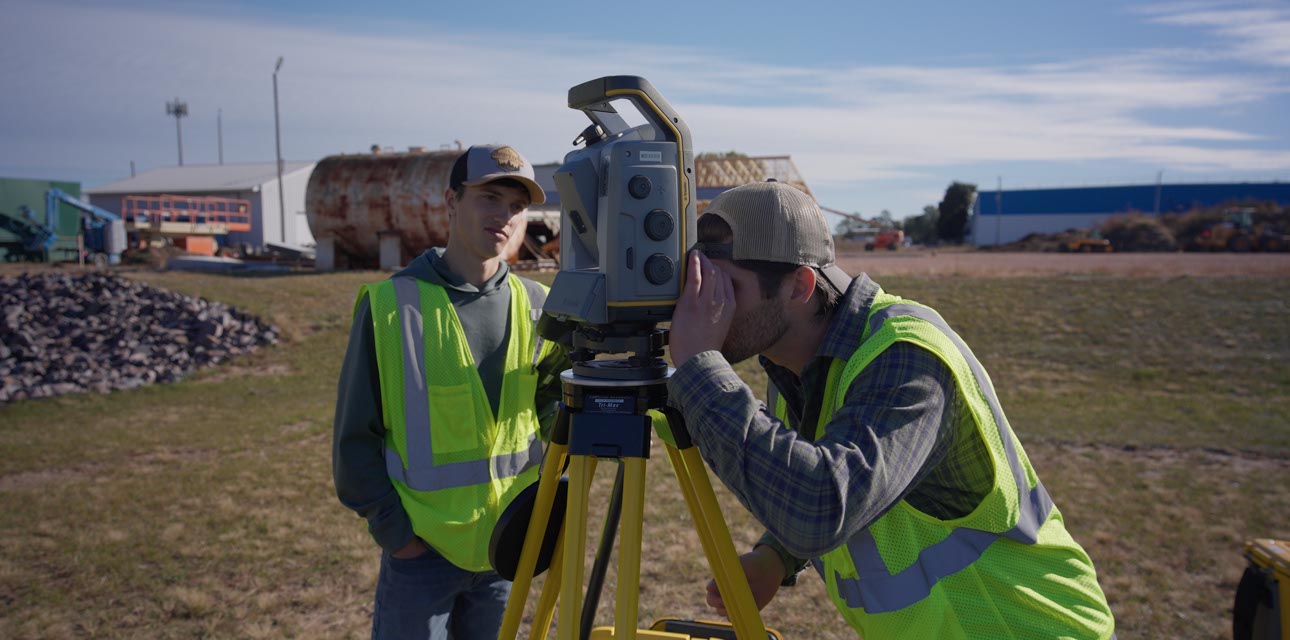
Civil engineering technicians play a vital role in designing, building, and maintaining the roads, bridges, and transportation systems that connect our communities. In this program, you will learn how to collect and analyze data, assist in design projects, and ensure the safety and quality of infrastructure construction. You will build the technical, mathematical, and problem-solving skills that make you a key contributor to the engineering process.
At Mid-State, you will train in the Advanced Manufacturing, Engineering, Technology and Apprenticeship (AMETA®) Center, learning directly from instructors through hands-on fieldwork, lab activities, and a capstone design project. You’ll graduate ready to join the workforce or advance toward professional licensure as a land surveyor.
Program Facts
Program Outcomes
Graduates leave ready to succeed in their careers. Each year, data from Mid-State's Graduate Survey and statewide reports show consistently high satisfaction and strong starting salaries. Here's a snapshot of what success looks like after graduation.
Career Opportunities
Program Details
Take a closer look at what the program offers and what to expect.
Your course plan may vary, and you'll get a recommended sequence once you're enrolled. See below for full course details, see the program information guide, or talk with your advisor.
Meet our full-time instructors.
Michael Johnson, BS, MS, MBA
Michael holds an MBA from UW–Milwaukee, an MS in career and technical education from UW–Stout, and a BS in civil engineering from the Illinois Institute of Technology. He is also a certified professional engineer in the state of Wisconsin and holds a remote pilot’s license for commercial drone use. Michael has worked as a design engineer and construction inspector for eight years, including design and inspection of residential, commercial, and industrial developments. He completes ongoing professional development to keep his skills fresh and maintain his license as a professional engineer (PE).
“Technology is constantly changing the way we design and construct our country’s infrastructure, enabling us to build more efficiently than ever before. Being trained using the latest equipment and software makes our graduates extremely valuable to employers in our industry.”
Greg Webster, BCE, MS, MSCE
Greg earned both a BCE and MS from Auburn University and an MSCE from Purdue University, all in civil engineering. He is an NSPS Level IV Certified Survey Technician (Survey Field Manager) and holds five certifications in Wisconsin’s Highway Technician Certification Program. His experience includes work as a project engineer for multimillion-dollar wastewater treatment construction projects in four different states. He has also been a research technician on pavement material research projects for DOTs in Alabama and Indiana and has co-authored journal articles in Concrete International and ASCE Materials Journal on this research. He is an active member of the Wisconsin Society of Land Surveyors and is the Vice-President for the Central Chapter of the Wisconsin Society of Land Surveyors.
“Civil engineering provides our roads, airports, treatment facilities, and other municipal infrastructure we use every day. It is rewarding to play a role in projects that benefit our society—and help prepare students to move into in-demand careers as surveyors, inspectors, drafters, material testers, or estimators so they can tackle the challenges of our ever-growing population and ever-changing world.”
Employers will expect graduates of this program to be able to:
- Utilize graphic techniques to produce engineering drawings.
- Conduct standardized field and laboratory testing on civil engineering materials.
- Utilize modern surveying methods for land measurements and/or construction layout.
- Estimate material quantities and costs for civil engineering projects.
- Utilize geometric elements to develop corridors.
- Design storm systems to meet given design requirements.
- Determine forces and stresses in elementary structural systems.
- Employ productivity software to solve technical problems.
Alongside your career training, you'll develop key workplace strengths. Explore the additional skills you'll build.
To succeed in this program, you'll need to meet certain technical standards. These are the key skills and abilities needed for the program and future career success—with or without reasonable accommodations. Be sure to review them carefully before you apply.





Explore Other Options
Other Programs
Explore more Mid-State programs and find your path to success.

Workforce Training
Not ready for a full degree? Learn job-ready skills with our workforce training options.

Continuing Education
Add a new skill, explore a hobby, or take the next step in your career with our lifelong learning options.