Culinary Production Line Cook
Why Culinary Production Line Cook?
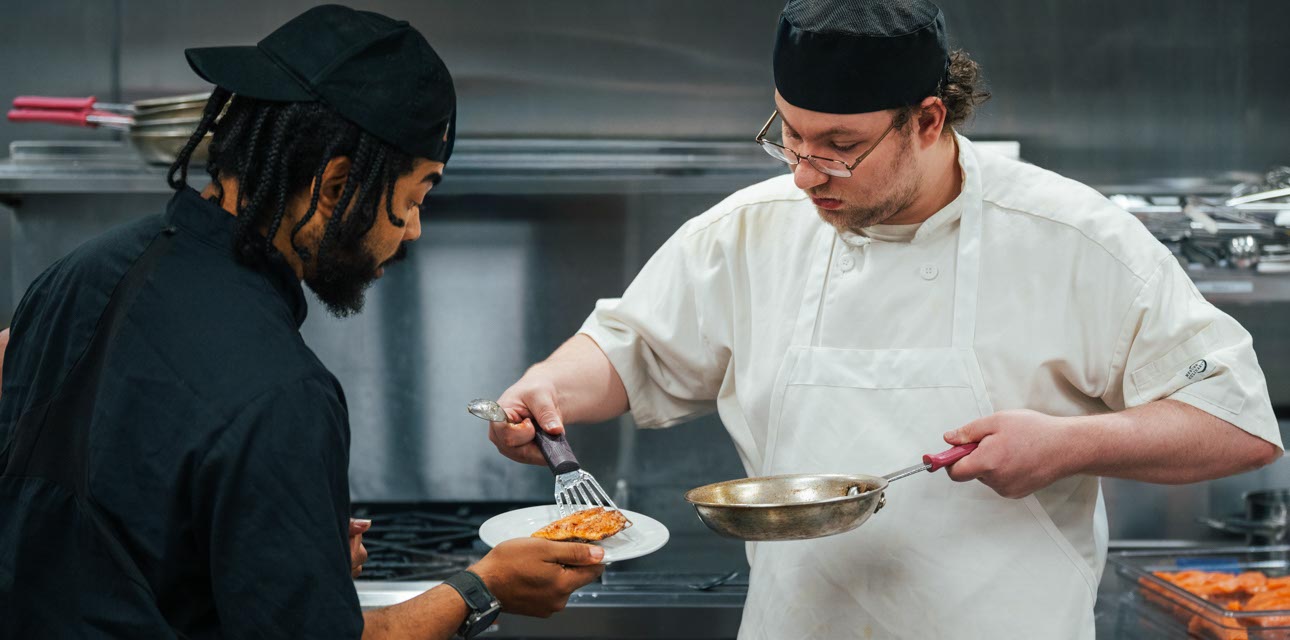
The culinary industry offers endless opportunities for creative individuals who take pride in their craft. In this program, you will learn the techniques and skills needed to prepare and present quality food in professional kitchens. You will gain experience in food preparation, sanitation, and kitchen operations while building the confidence to begin your career in this fast-growing field.
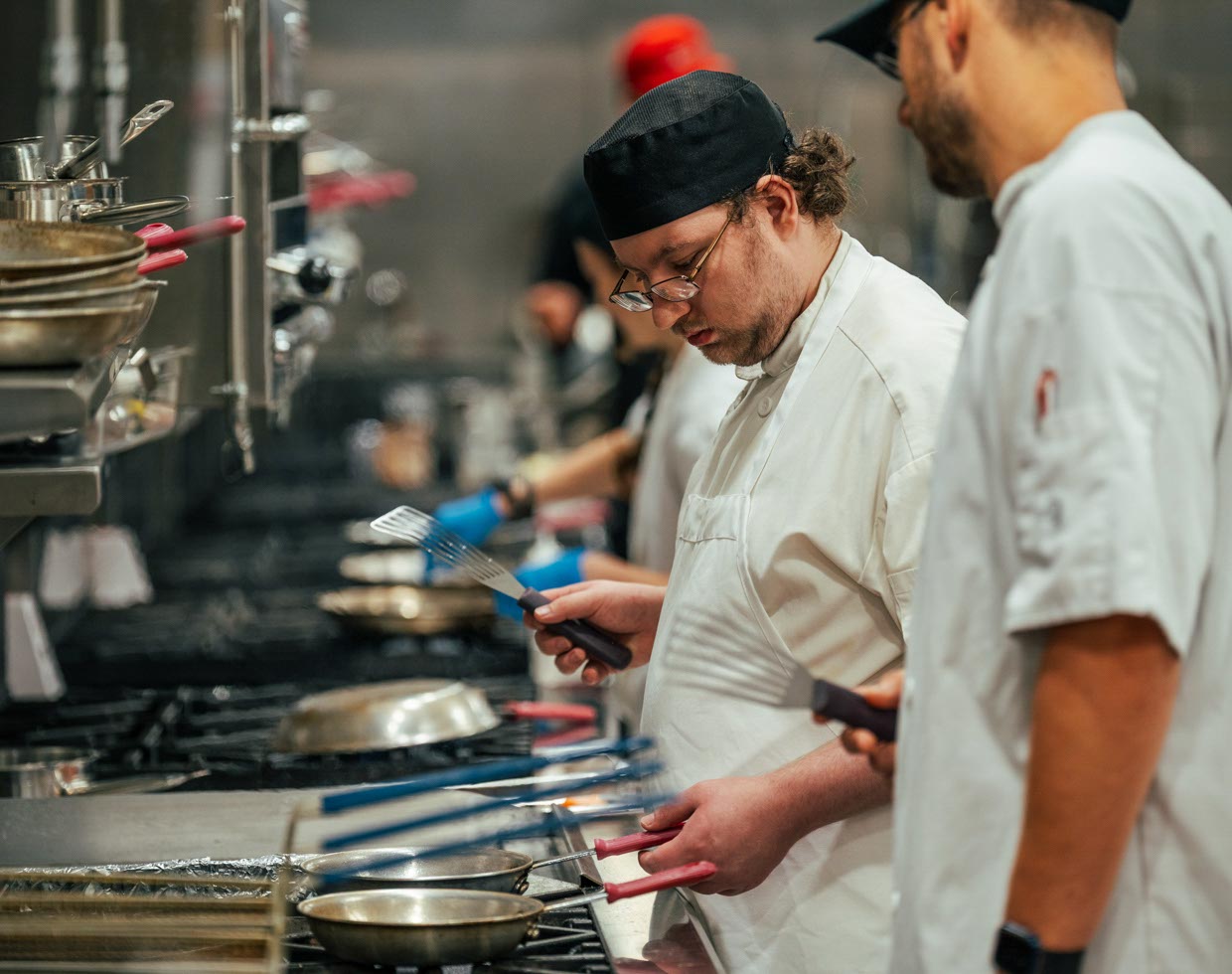
At Mid-State, you will train in the state-of-the-art culinary teaching kitchen and Gourmet Café learning lab restaurant. You’ll complete the Culinary Foundations certificate on your way to earning the Culinary Production Line Cook technical diploma, with the option to continue toward the Culinary Arts associate degree.
Program Facts
Program Outcomes
Graduates leave ready to succeed in their careers. Each year, data from Mid-State's Graduate Survey and statewide reports show consistently high satisfaction and strong starting salaries. Here's a snapshot of what success looks like after graduation.
Career Opportunities
Program Details
Take a closer look at what the program offers and what to expect.
Your course plan may vary, and you'll get a recommended sequence once you're enrolled. See below for full course details, see the program information guide, or talk with your advisor.
Meet our full-time instructors.
Ryan Petrouske, AAS
Chef Ryan graduated Phi Theta Kappa with his culinary arts associate degree from Nicolet College. He holds certifications in culinary assistant, hospitality and restaurant management, controlling foodservice, and baking. Ryan has spent most of his working life in the restaurant industry, having progressed up the ranks in both kitchens and dining rooms to ultimately owning and running a successful restaurant in northern Wisconsin. He has a continued passion for the industry, which he is excited to instill in his students. Prior to teaching full-time for Mid-State he also taught part-time at Nicolet College.
“Knowledge is much like working in the hospitality industry—it doesn’t do us any good to hold it just for ourselves. Sharing our experience and talent with others makes the world a better place. This is my reward for being an educator. I not only get to share my knowledge but also get pushed to grow and learn from my students and other industry professionals. I am always pleased to see where our graduates end up after their training!”
Employers will expect graduates of this program to be able to:
- Apply principles of safety and sanitation in food service operations.
- Demonstrate culinary skills.
- Manage food service operations.
- Plan menus.
Alongside your career training, you'll develop key workplace strengths. Explore the additional skills you'll build.
To succeed in this program, you'll need to meet certain technical standards. These are the key skills and abilities needed for the program and future career success—with or without reasonable accommodations. Be sure to review them carefully before you apply.




Explore Other Options
Other Programs
Explore more Mid-State programs and find your path to success.

Workforce Training
Not ready for a full degree? Learn job-ready skills with our workforce training options.

Continuing Education
Add a new skill, explore a hobby, or take the next step in your career with our lifelong learning options.