Heating, Ventilation, & Air Conditioning (HVAC) Installer
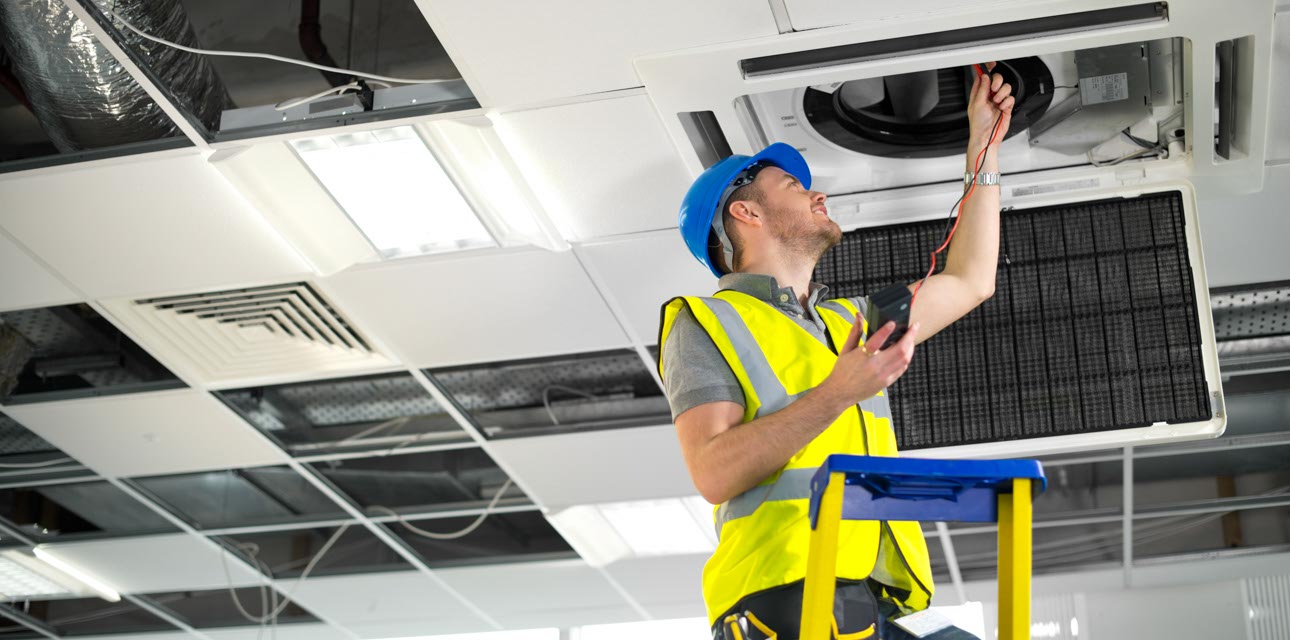
Why Heating, Ventilation, & Air Conditioning (HVAC) Installer?
HVAC professionals create comfortable, efficient, and healthy indoor environments in homes and businesses. In this program, you will learn to design, install, and service heating, cooling, and ventilation systems while gaining the electrical and mechanical skills needed to keep them running safely and efficiently. You’ll build the foundation for a rewarding career in this high-demand skilled trade.
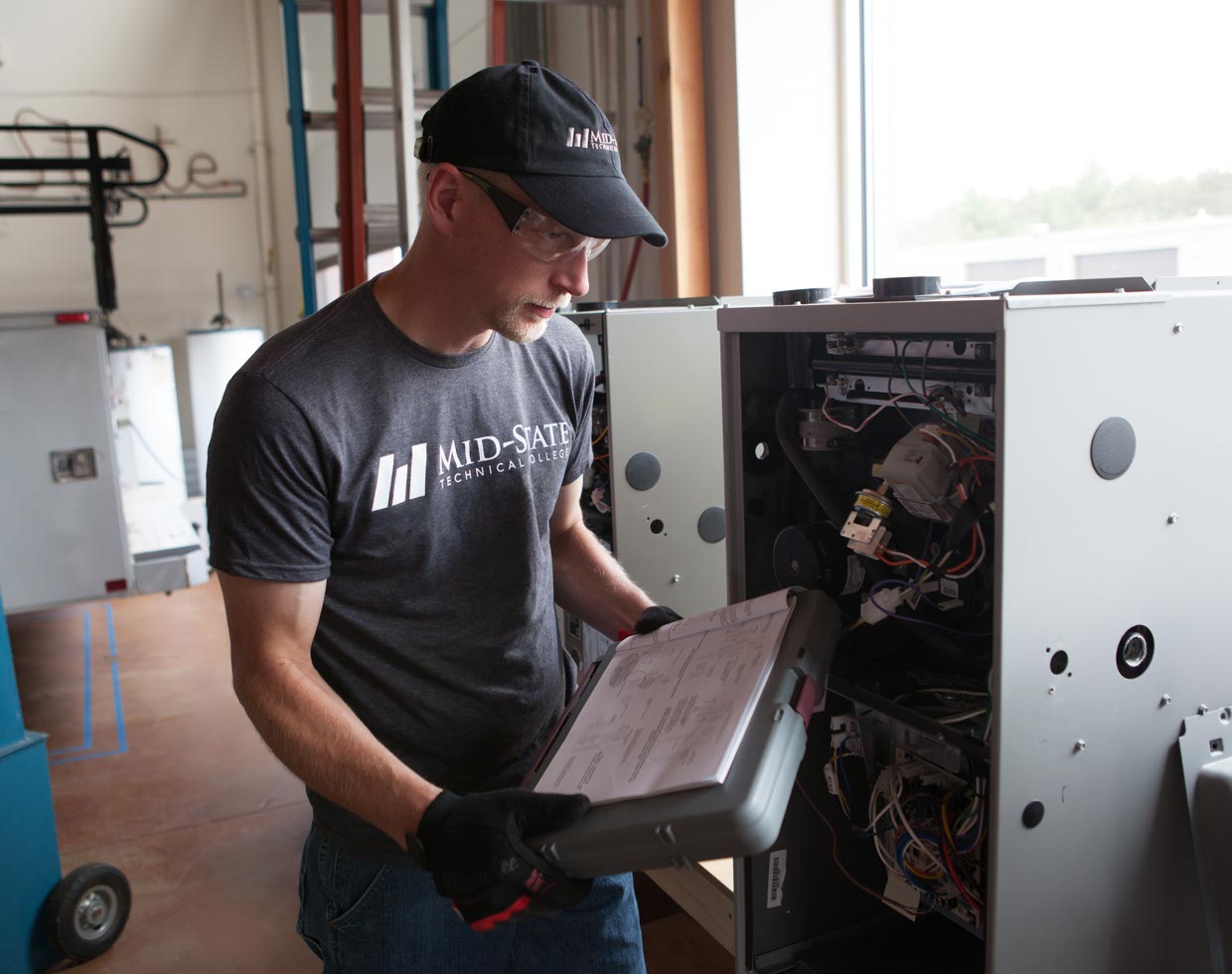
At Mid-State, you’ll complete hands-on training just two days per week over nine months, combining classroom instruction with real lab experience. You will graduate prepared for entry-level employment and ready to sit for the EPA 608 Technician Certification exam.
Program Facts
Program Outcomes
Graduates leave ready to succeed in their careers. Each year, data from Mid-State's Graduate Survey and statewide reports show consistently high satisfaction and strong starting salaries. Here's a snapshot of what success looks like after graduation.
Career Opportunities
Program Details
Take a closer look at what the program offers and what to expect.
Your course plan may vary, and you'll get a recommended sequence once you're enrolled. See below for full course details, see the program information guide, or talk with your advisor.
Meet our full-time instructors.
Mark Haferman, AD
Mark earned his associate degree in industrial mechanical technologies from Mid-State Technical College. He is also a licensed Journeyman Steamfitter and Journeyman Plumber with EPA 608 certification. His teaching at Mid-State draws on 12 years of experience in HVAC, plumbing, and mechanical field service.
“Being a trades instructor is very fulfilling for me. I love to pour into students, share what I have learned through experience, work alongside them, and help them pursue their career in the trades.”
Karl Schwingel, BS
Karl graduated from Northland College with a bachelor of science in environmental science. His certifications include Solar Thermal Installer by the North American Board of Certified Energy Practitioners® (NABCEP®) and EPA 608. Karl’s teaching is informed by 25 years of experience installing and servicing renewable energy systems and doing general residential construction as well as 15 years specializing in hydronic heating system design, construction, and service.
“I really enjoy developing in my students the skill to ask the right questions, in the right way. If you learn to ask the right questions, the answers will yield actionable knowledge.”
Employers will expect graduates of this program to be able to:
- Join pipes or tubing to equipment and to fuel, water, or refrigerant source to form complete circuit.
- Test pipe or tubing joints or connections for leaks, using pressure gauge or soap-and-water solution.
- Lay out and connect electrical wiring between controls and equipment, according to wiring diagrams, using electrician’s hand tools.
- Install, connect, and adjust thermostats, humidistats, and timers using hand tools.
- Test electrical circuits or components for continuity using electrical test equipment.
- Repair or replace defective equipment, components, or wiring.
- Obtain and maintain required certifications.
- Install ductwork and test for leaks.
- Size and lay out ductwork.
- Comply with all applicable standards, policies, and procedures, including safety procedures and the maintenance of a clean work area.
- Inspect and test systems to verify system compliance with plans and specifications or to detect and locate malfunctions.
Alongside your career training, you'll develop key workplace strengths. Explore the additional skills you'll build.
To succeed in this program, you'll need to meet certain technical standards. These are the key skills and abilities needed for the program and future career success—with or without reasonable accommodations. Be sure to review them carefully before you apply.





Explore Other Options
Other Programs
Explore more Mid-State programs and find your path to success.

Workforce Training
Not ready for a full degree? Learn job-ready skills with our workforce training options.

Continuing Education
Add a new skill, explore a hobby, or take the next step in your career with our lifelong learning options.