Welding
Why Welding?
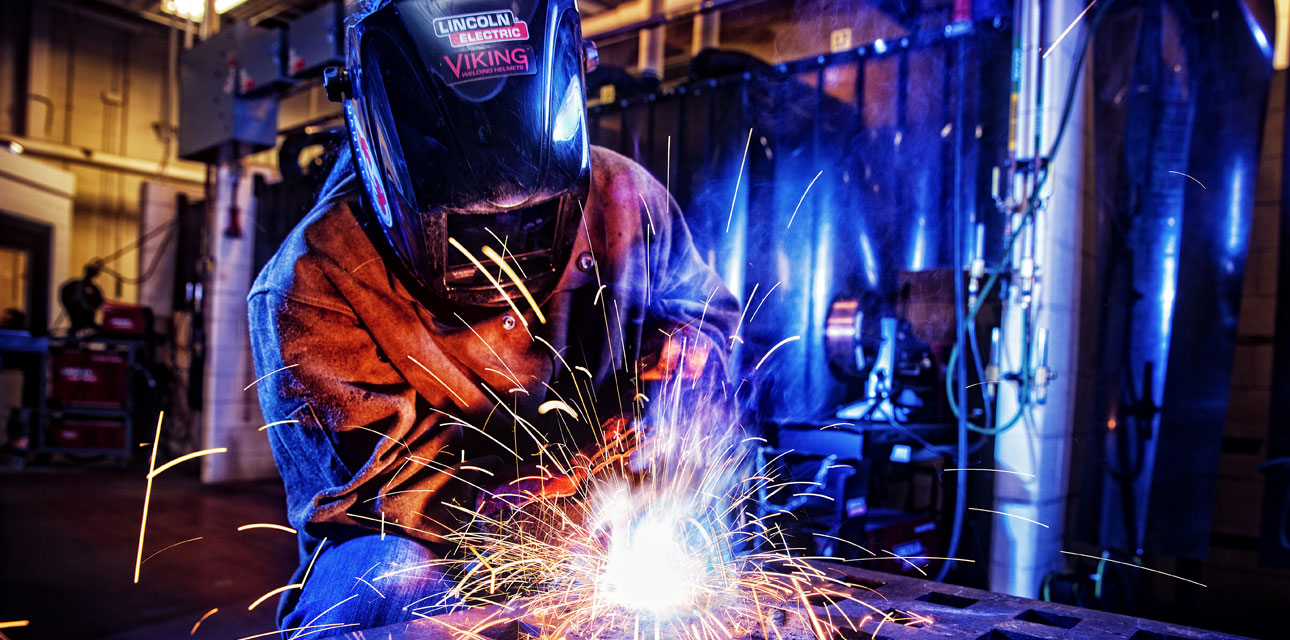
Welding is a foundational skill behind nearly everything built with metal, from everyday products to massive infrastructure projects. In this program, you’ll explore welding as both a skilled trade and an increasingly technical field, learning how modern welders work with advanced tools, automation, and precision systems to shape the world around us. It’s an ideal path for those who enjoy building, creating, and working with metal.
At Mid-State, you’ll gain extensive hands-on experience across multiple welding processes while learning to work with a variety of metals and fabrication techniques. The program prepares you for employment in production, construction, manufacturing, and maintenance environments and positions you to pursue industry-recognized certification testing upon completion.
Program Facts
Program Outcomes
Graduates leave ready to succeed in their careers. Each year, data from Mid-State's Graduate Survey and statewide reports show consistently high satisfaction and strong starting salaries. Here's a snapshot of what success looks like after graduation.
Career Opportunities
Program Details
Take a closer look at what the program offers and what to expect.
Your course plan may vary, and you'll get a recommended sequence once you're enrolled. See below for full course details, see the program information guide, or talk with your advisor.
Program Information Guide (PDF)
Full-Time Curriculum (28-30 Total Credits)
Credit for Prior Learning (CPL) options are available for some courses.
Term 1: 14-16 Credits
Course Number | Course Name | CPL | Credits |
|---|---|---|---|
10457119 | No | 1 | |
31442311 | No | 1 | |
31442315 | No | 1 | |
31442317 | No | 1 | |
31442320 | 1 | ||
31442323 | No | 2 | |
31442324 | No | 2 | |
31442325 | No | 2 | |
31442413 or 10804107 | Technical Math for Welding or Fabrication or College Mathematics | No or Yes | 1 or 3 |
31462318 | 1 | ||
10890102 | 1 |
Term 2: 14 Credits
Course Number | Course Name | CPL | Credits |
|---|---|---|---|
10442102 or 30442105 | No | 2 | |
10442103 or 30442106 or 10442115 | Advanced GTAW (TIG) or Advanced TIG (Stainless) or Welding Fabrication Techniques | No | 2 |
10457120 | No | 1 | |
31442314 or 30442104 | Gas Tungsten Arc Welding: Introduction or Basic TIG (Stainless) | No | 2 |
31442316 | No | 1 | |
31442319 | No | 2 | |
31442321 | No | 1 | |
31442322 | No | 2 | |
31442412 | No | 1 |
Meet our full-time instructors.
Ashley Borski, TD
Ashley completed her technical diploma in welding from Mid-State Technical College and is a Certified Associate Welding Inspector. Her background includes five years of welding experience building structural racking and bridges and two years in quality control inspection and testing, in addition to weld training. She has also served as a welding mentor for youth apprentices during her time in industry.
“I’ve always believed teaching welding is more than helping students earn a degree—it’s about watching them grow. Every day, I get to see their confidence build alongside their technical skill. I love seeing when hard work turns into pride in what they’ve created. My goal is to prepare my students not just for a job, but for whatever path they choose—whether that’s building a career here in central Wisconsin or taking their skills across the country or around the world. Being part of that journey is what makes teaching welding so rewarding.”
Russell Moore, AAS, BS
Russell earned his bachelor’s degree from Bellevue University and also has an associate degree in welding technology. He has over 25 years of experience working in the welding and metal fabrication industries along with eight years of postsecondary education experience.
“Skilled welders are in very high demand around the world. I enjoy providing my students with the skills they need to gain employment and be successful in this rewarding career field.”
Employers will expect graduates of this program to be able to:
- Demonstrate industry-recognized safety practices.
- Interpret welding drawings.
- Produce shielded metal arc welds (SMAW).
- Produce gas metal arc welds (GMAW).
- Produce flux core welds.
- Produce gas tungsten arc welds (GTAW).
- Perform cutting operations.
Alongside your career training, you'll develop key workplace strengths. Explore the additional skills you'll build.
To succeed in this program, you'll need to meet certain technical standards. These are the key skills and abilities needed for the program and future career success—with or without reasonable accommodations. Be sure to review them carefully before you apply.
This program prepares you for licensure to work in Wisconsin. If you plan to work in another state, be sure to check that state's licensure requirements—Mid-State's program may not meet them all. If you've applied to the program and have any questions about this information, talk to your advisor.





Explore Other Options
Other Programs
Explore more Mid-State programs and find your path to success.

Workforce Training
Not ready for a full degree? Learn job-ready skills with our workforce training options.

Continuing Education
Add a new skill, explore a hobby, or take the next step in your career with our lifelong learning options.